Sunday, March 28, 2010

Hedgebrook Farm and the Herds Inn

Kitty Hockman Nicholas is a third generation dairy farmer who raises 20 Jersey cows, crops, and a managerie of sheep, pigs, chickens, donkeys, and peacocks on 50 acres in the Northwest corner of Virginia, near Winchester. The farm sits within view of five mountain ranges. Kitty grew up at Hedgebrook, and left the farm for college. In 1977, when Kitty’s brother died tragically in a farming accident, Kitty moved back to the farm to take over. Since then, through the death of her father and the end of her marriage, Kitty has kept her farm going with her spunk and creativity, and with help from her two daughters. “Everything on the farm is challenging,” says Kitty, “but that’s why we like it. And we like it because it’s our food.”

Four generations of women currently live at Hedgebrook. In addition to Kitty, the farm is home to her 93-year-old mother (also named Kitty), her daughter Shannon, and her granddaughter Meghan. There are no men in the family who are involved in the farm. But, says Kitty, “We consider that an asset – an opportunity. I couldn’t do it without Shannon [who also works full time away from the farm], and I don’t think she could do it without me. We have men who work for us, but we are woman owned and operated.” As Shannon explains, “Mom’s the farm manager– she takes care of all the animals – and I do all the reservations and cleaning for the Herds Inn.”

In 2005, Hedgebrook Farm was featured on the American Public Television show America’s Heartland, in a segment on women farmers. The segment ends with Kitty exclaiming: “I can’t tell you how excited I am to be a lady farmer. So go for it, ladies!”

In previous generations, the men of the family ran Hedgebrook Farm. Kitty’s grandfather founded the farm in 1906. He raised Hereford beef cattle and grew 6 acres of apples. He cared for his apples with no less than 15 tractors, and he sprayed often with pesticides to keep insects from damaging the tasty crop. In retrospect, says Kitty, “I think my grandmother was allergic to the spray. All of us probably were.” One acre of apples still stands today, but because Kitty and Shannon don’t believe in spraying pesticides (the farm is pesticide-free), they say the apples only do well in dry years, when insects aren’t as much of a problem.

In 1949, Kitty’s father transitioned Hedgebrook Farm to a dairy. He started with 20 Holstein cows, the quintessential black and white variety that produces a high volume of milk. When Kitty took over, she switched the herd to Jerseys, a smaller brown breed with big, beautiful eyes and especially rich milk. As Kitty puts it, “Jerseys are in my blood.” Her grandmother’s family raised Jerseys, and when Kitty was young, she asked her father to buy a Jersey calf for her to raise. When he did, as Kitty recalls, she named the calf “Liberator’s Dave Peg.” Says Kitty, “Having that Jersey was really important to me. She produced really high quality milk.”

When Shannon was young, according to Kitty, 36 dairy farms were spread through Clarke and Frederick Counties. Now, each county has only three dairies. Kitty attributes the survival of her farm in part to the niche markets she’s developed. Today, Kitty sells some of the milk from her herd in bulk to Hood, a dairy processor and distributor. She sells the rest direct to the consumer through an innovative “cow boarding” program.

Cow Boarding

The milk we buy in stores is pasteurized, or heated to kill any pathogens. Raw milk, on the other hand, is unheated, and because of the FDA’s position that unpasteurized milk is dangerous, it is illegal to buy or sell in most states. Raw milk advocates argue that the FDA grossly overstates the risk, that raw milk is healthier and tastier than pasteurized milk, and that it may even cure asthma and allergies. (To read a Washington Post report about raw milk and Hedgebrook Farm’s program, click here.)


Kitty says, because of the fear about raw milk when she was young, “My dad didn’t let anyone get milk out of the tank. Nobody was allowed to drink it. But we’ve come full circle back to the time of my great grandparents … my granddaughter was raised on raw milk.”

State laws regarding raw milk sales vary. In Virginia, it is illegal to buy or sell raw milk, but it is legal to drink raw milk from a cow that you own. In order to make their delicious, Grade A raw Jersey milk available to more people, in 2001 Kitty and Shannon started a cow boarding program. Customers can buy a share of one of the Hedgebrook Farm Jerseys. Each cow is divided into 25-35 shares, depending on how much milk she produces, and owning a share gives customers a gallon glass jar full of fresh milk every week. Customers can pick up their milk from the farm, or can opt to have it delivered by van, for a fee, as long as they live within Northern Virginia. Both the cow boarding program and the popularity of raw milk have grown tremendously since 2001.

Kitty also welcomes bartering, another legal way to get raw milk in Virginia. She says, “Someone can come here and, for instance, trade me a bottle of wine for a gallon of milk. We like bartering – it’s what this country was founded on.”

Kitty says of farming, “In good years it’s good, but in bad years it’s very hateful, like last year. Without the cow boarding program – without our niche markets -- we might not have been able to survive.” Through the years, Hedgebrook has hosted a corn maze, pumpkin patch, weekend farm market, and summer camp. To have a little more time for themselves, Kitty and Shannon have limited agritourism on the farm to what they call their greatest successes – the cow boarding program and Herds Inn. And as she’s done for over 30 years, Kitty continues to host school tours.
The Herds Inn

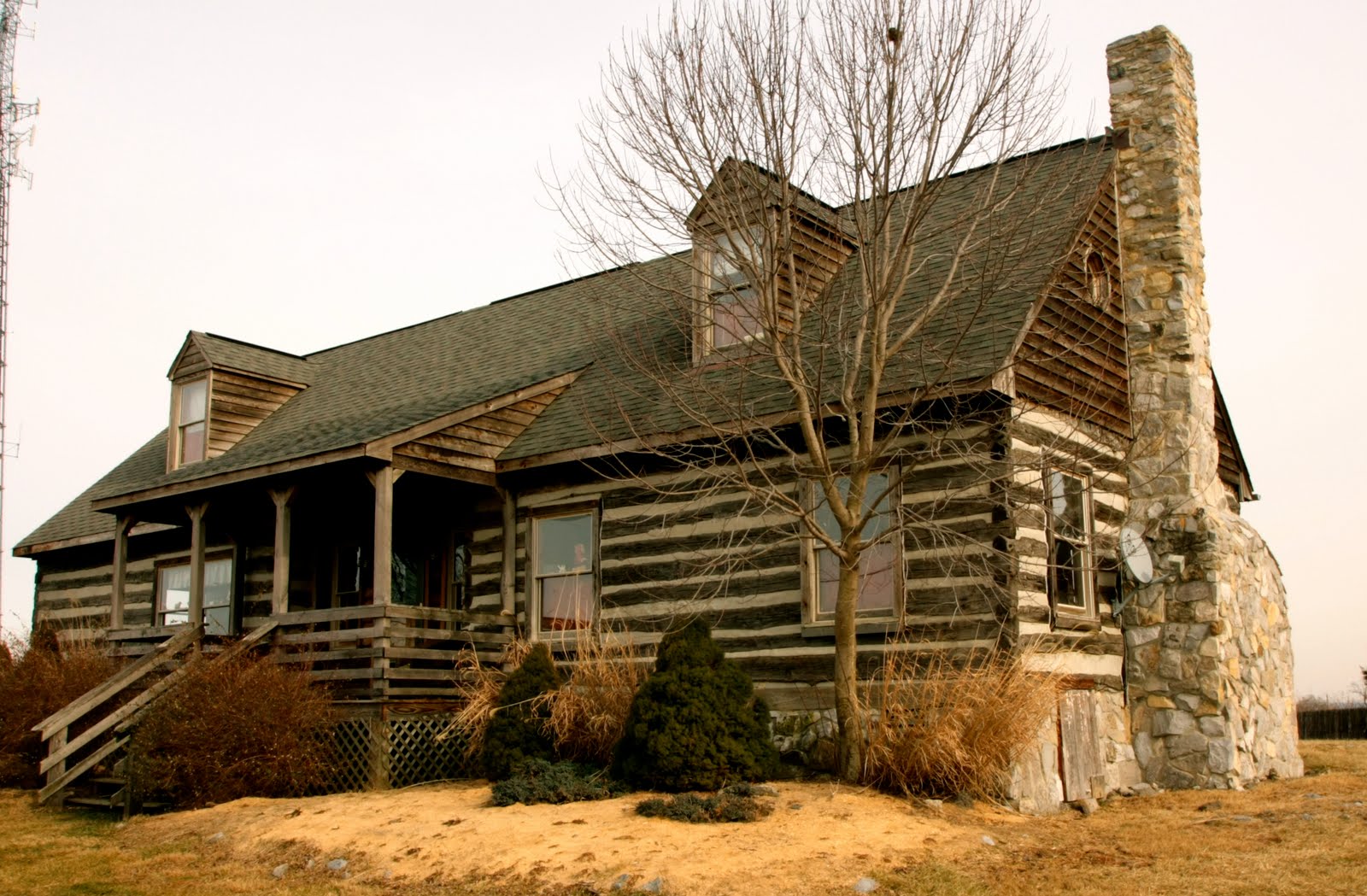
The Herds Inn is a hand-hewn log home that Kitty and Shannon rent to one group at a time. The two-bedroom home was built with wood from two 1800s tobacco barns that once stood in South Boston, VA. The floors, trim, and doors are also recycled from cypress wood vinegar vats from the National Fruit Apple Plant. Kitty originally designed the Herds Inn as her own home, but she decided to move instead into the Hedgebrook manor house to care for her mother.

The Hockman women, always creative entrepreneurs, decided to open the Herds Inn to guests in 2000. Their first guest, as it happened, was a reporter from the Washington Post (you can read his report here).

In addition to its two bedrooms, the Herds Inn has two full baths, a stocked kitchen, a living room with satellite TV and sofa bed, and laundry. The house can sleep up to eight guests.

Herds Inn guests are welcome to watch Kitty milking the herd each morning or evening using Virginia’s last remaining glass tube milking machine. Visiting kids can also try hand milking the cows. The sheep, pigs, and goats appreciate visitors, and guests can watch different farm happenings – like lambing and sheep shearing -- depending on the season.


Off the farm, says Shannon, Winchester is full of things to do. The area’s biggest tourist draw is the Apple Blossom Festival, a week of music, parades, and dancing that attracts 250,000 people each spring.  

If you go:
Rates start at $125/night for double occupancy, and $750/week. A two night minimum stay is required. Additional guests (up to 8) are $20/night, per person. Children are welcome; kids under two stay free. Pets cannot be accommodated.

Contact:
innkeeper@theherdsinn.com
1.866.783.2681

The Herds Inn
688 Shady Elm Road
Winchester, VA 22602

Thursday, March 11, 2010

WeatherLea Farm


WeatherLea Farm traces its history back to the late 1700s. Like many old homes in Virginia, the WeatherLea farmhouse was constructed in parts. The log cabin was built first in 1794. Over time, additional rooms were added. Eventually the farmhouse became the lovely mélange of materials and building styles that it is today.

The farm is named for Yetive and Earle Weatherly, who lived on the land from 1950 until 1986. During that time, WeatherLea was a small and diverse subsistence farm. One piece of their diverse operation was running a cow dairy. The Weatherlys experienced a trend towards larger farms and more centralized processing during their 36 years on the farm. For instance, the milk trucks that collected WeatherLea’s milk went from hauling milk cans to much larger capacity milk tanks.


Current WeatherLea owners Pamela and Malcolm Baldwin are recent arrivals to farming. After retiring from their respective careers (Pamela was a Foreign Service Officer and Malcolm worked in environmental law), they settled into life at WeatherLea Farm, where they raise over 30 sheep, three llamas (to protect the flock), an acre of wine grapes, and hay. The Baldwins also host weddings and guests on the 28-acre farm. WeatherLea’s motto is: “Wool, wine, weddings, and weekends!” Pamela says, “I’m twice as busy as before I retired, but I’m having twice as much fun.”  

Pamela and Malcolm use to travel the globe for their work, spending time in countries as varied as Croatia, Sri Lanka, and New Zealand. Pamela says that they were inspired by the agritourism farms they toured while traveling, particularly the sheep farms, and wineries of New Zealand’s South Island. Although the Baldwins bought WeatherLea Farm in 1992, they continued to commute to DC until they retired in 2003. Since then, says Pamela, their world has gone from global to very local.

Wool

Pamela and Malcolm decided to raise sheep after visiting Loudoun County farms during the county’s annual farm tour. They were drawn in particular to the wool-producing sheep farms. The Baldwins decided to buy five Romney sheep in 2003, and their flock has since expanded to over 30 Romneys and Merinos, both bred for their fine wool. “Wool sheep,” says Pamela, “are also generally good for meat, although many meat sheep have poor wool.” The Baldwins send wool from their sheep to mills in New Jersey and Prince Edward Island to be woven into blankets. They also sell raw wool to Solitude, a wool farm and yarn-maker in Western Loudoun County. Solitude sells their artisan yarn at DC farmers markets, events, and festivals. Guests at WeatherLea weddings have used the yarn produced by Weatherlea’s sheep and spun by Solitude to make beautiful handmade wedding gifts.

This year, for the first time, WeatherLea Farm will be on Loudoun County’s Spring Farm Tour. The Loudoun Valley Sheep Producers’ Association will set up a wool shop in the barn, as well as spinning and weaving demonstrations.

Wine

After taking courses on grape growing and winemaking, the Baldwins planted their vineyard in 2005. They now grow 1200 vines of three French varieties: Malbec, Viogner, and Cabernet Sauvignon. According to a vineyard tradition, each row of grapevines is marked by a rosebush. The Baldwins make a little wine themselves – last year they bottled 12 cases -- and sell the remainder of their grape harvest to the award-winning North Gate Vineyard in nearby Purcellville.

In addition to grapes, Pamela and Malcolm also grow raspberries. And last year, they planted apple and peach trees that within a few years will bear fruit.

Weddings

In 2007, Pamela and Malcolm’s daughter was married at the farm. A handful of friends and relatives were also married at WeatherLea. Guests told the Baldwins that the farm was a perfect place for a ceremony and celebration, and urged them to advertise WeatherLea as a great wedding site. Because of the property’s zoning as a farm, weddings are limited to ten a year, and they must be at least 14 days apart. In 2009, WeatherLea hosted six weddings. Pamela felt like that was just about the right number. Most weddings, she says, take place in May-June or September-October. Couples have three choices for outdoor ceremony sites: the south lawn with its Japanese gazebo, the vineyard with its Victorian gazebo, or the deck overlooking the farm’s picturesque pond. As an indoor alternative and reception site, WeatherLea’s red 1870s barn can hold up to 150 people. The barn is in remarkable condition, and is one of the few Civil War-era barns left in the county. Union soldiers burned most of the Loudoun County’s older barns during the war.           


Weekends

The Baldwins just opened their lovely little “milk cottage” to overnight guests in 2010. Pamela says that hosting guests was a natural extension of their wedding business, and that couples often asked if they could stay on the farm before and after their wedding. The cottage is a converted milking parlor that sleeps up to four. Its one bedroom has a queen bed, and a sleeper sofa can accommodate two more guests in the living room. The cottage also has a kitchen, bath, laundry, HDTV, DVD player, and wi-fi. The cottage’s inviting living room has warm red walls decorated with paintings by the Baldwin’s daughter. Breakfast is provisioned in the cottage kitchen, with options like cereal, granola, yogurt, coffee, tea, juices, bagels, cream cheese, and fresh-baked muffins.


WeatherLea is well situated for visitors looking to explore the area. It is six miles from the Appalachian Trail, one mile from the C&O Canal, one mile from the Potomac River bridge to Maryland, and close to many Civil War historic sites. Loudoun County Civil War history is particularly interesting, as the county was sharply divided during the war. In Lovettesville, where WeatherLea is located, many Quaker residents voted against secession from the Union during a county vote in 1861. The Sanbower family, who lived at WeatherLea during that time, was in fact loyal to the Union.

The Future

In partnership with the Land Trust of Virginia, the Baldwins have placed WeatherLea under conservation easement. The conservation easement is permanently attached to the deed of the property, so the Baldwins as well as subsequent owners lose their rights to subdivide the land. As incentive to protect their land, property owners who place their land under conservation easement are given a federal tax deduction and state tax credits.

Both Pamela and Malcolm are deeply involved with local and regional organizations that work towards farmland preservation, vibrant rural economies, and environmental protection. Most of the traditional working farms in the area have disappeared under development, which is why it’s especially important to the Baldwins to preserve what they can.

If you go:

WeatherLea Farm & Vineyard
Pamela and Malcolm Baldwin
39595 WeatherLea Farm Lane
Lovettsville, VA 20180

The Milk Cottage sleeps up to four, with a full kitchen, bath, and provisioned breakfast. Children are welcome. Cost is $110-150/night, with a two-night minimum. The cottage is available year round.

Thanks to Pamela Baldwin for providing photos 1-4

Friday, March 5, 2010

Guest Post from Agritourism Australia

Pauline Porcaro of Agritourism Australia has written this wonderful guest post for Farm Stay USA. Thanks Pauline!

Agritourism in Australia

Michelle has asked me to provide an overview of agritourism in Australia, our website (www.agritourismaustralia.com.au), and how we got into agritourism in the first place; so here we go!

My interest in agritourism started teaching my tourism students about business planning and looking for new business ideas they could work on. Agritourism appeared a number of times in the forward government tourism planning documents and I had already noted a lot of agritourism in Italy where we have a holiday home. The two factors together started me reading up on agritourism on the net and I became fascinated with what seemed to be a wonderful ‘down-to-earth’ or ‘escape-the-rat-race’ form of tourism. I felt people were starting to move away from traditional forms of tourism and looking for more natural products; agritourism seemed to provide this.

There was some funding available through the International Specialised Skills Institute here in Australia to study some skills and knowledge which were not adequately developed in this country, so I applied and won the ‘Veneto’ fellowship to travel to Italy and study their well-developed agritourism system and see what we could learn from that. The journey certainly opened my eyes to what I believe is a very sustainable form of tourism, from an economic, social, and environmental point of view; a sector of tourism that has developed well due to good Government intervention, planning and funding. I transformed from being interested to being passionate about agritourism.

Some of the features of the Italian system that make it so successful are;

· They have had Government funding for farmers (up to 70% of set up costs) since 1985

· Farmers must do compulsory training before commencing, at least 100 hours, and government provide funding through training organizations to support this

· Each agritourism has a limit to how large it can grow, ensuring that the business is shared around in each region

· Farmers must continue to earn more than 50% of their revenue from farming; this protects the strong agricultural base in Italy and ensures farmers continue working their farms as well as the tourism business

· Farmers who access government funding to modify their farms for the new business must remain in business for at least 10 years; the government is obviously protecting its financial interests

· Farmers accessing funds must not be over 50 years old

· There is signage in every country town identifying all local agritourism establishments

These features have contributed to the growth of the successful agritourism industry in Italy; a country where the idea of agritourism is so ingrained in the culture that people talk about having an ‘agritourism holiday’.

On return to Australia I was obliged to disseminate my findings from the study trip and wrote a 130 page report that has been distributed to a range of interested bodies. In addition to this I felt morally obliged to do something about trying to grow the industry here. Since returning we have started our on-line agritourism directory so people can find all relevant agritourism information in one place. The website, www.agritourismaustralia.com.au is growing slowly but surely, with the state of Victoria and Western Australia already with a great deal of listings; Queensland will be next to be up and running.

Since starting late last year we have already had a couple of thousand hits from 46 different countries around the world. It has been very exciting. We believe this interest has come from using the international terminology ‘agritourism’; previously in Australia only the term farm stay was used in marketing farm accommodation. There are two problems with this, the term used in many other countries is agritourism not farm stay, secondly, agritourism is an inclusive term as it includes produce sold from the farm gate, events on farms, wineries, tours of farms etc., so it is a much broader term. Some of the farmers that have taken out featured listings with us are reporting a lot of international visits that they weren’t getting in the past; the new term is obviously working.

Australia has an abundance of wonderful tourism products on farms; the problem till now has been finding it, we hope that we are able to remedy this and we welcome you to have a look around the site at some of the great products on offer and perhaps consider a trip to Oz to experience our very “Aussie” farm hospitality and a delicious range of fresh produce.

Pauline Porcaro

Friday, February 26, 2010

Featured farm stays map

I created a map showing all the farms I've written about here on Farm Stay USA. Hopefully, the map will make the farm stay posts more accessible and better organized than they were when they were only listed in the blog archives. A small version of this map will always show up on the right hand side of the blog along with the other widgets, but it works much better in large form. You can always access the larger map with the link underneath the small map widget. Each placemark has a link to my post about the farm; you can also access the farms' websites and additional information via the placemarks.


View Farm stays featured on Farm Stay USA in a larger map

Wednesday, February 24, 2010

Guest Post for Beginning Farmers

I recently wrote a guest post for beginningfarmers.org that was published there on Monday. In the post, I define and explain farm stays, which is (strangely) something I haven't yet done on this blog. So I figured I would repost the piece here.
--------------

Farm stays are one form of agritourism that is popular elsewhere in the world, though not yet well known here in the United States. But Americans are hungering to reconnect with farms -- and yearning for fresh air, fresh food, and authentic, affordable vacations. As the desire to support small family farms grows, so does the appeal of taking a farm vacation. Compared to other kinds of agritourism, farm stays can be personal and foster deeper connections between farmers and their guests.

What is a farm stay?

A farm stay is any type of accommodation on a working farm. Farm stays can be, but aren't necessarily, interactive. Some are family-focused, offering kids the opportunity to feed the animals and collect eggs. Others don't allow children at all, instead offering a peaceful retreat for adults. For the accommodations, guests normally pay rates similar to area bed & breakfasts or vacation rentals, although pricing varies considerably. The term "farm stay" can also describe a work exchange agreement, where the guest works a set number of hours per week in exchange for free or very cheap accommodations, such as those set up through World Wide Opportunities on Organic Farms (WWOOF).

Possible farm stay accommodations include:
  • Cabins
  • Cottages
  • Converted barns/outbuildings
  • Farmhouse guest rooms
  • Platform tents
  • Tent camping
  • Yurts
Should you host guests on your farm?

As with any form of agritourism, the economic and social benefits from farm stays can be tremendous, but the benefits must outweigh the costs for you. Whether or not starting a farm stays makes sense depends on a number of factors, like:
  • Do you like being around people?
  • Would you mind having strangers staying on your farm?
  • What are the laws regarding agritourism and homestays in your area?
  • What kinds of resources do you have on your farm?
  • Do you already have bulidings that would work well for guest accommodations, with or without restoration?
  • If not, do you have an ideal setup for camping?
  • What are reasons people might want to visit your area?
Of course, the best way to decide whether or not you should start a farm stay or other agritourism operation is to talk with other farmers who have tried it.

Pennsylvania's Farm Vacation Association, Vermont's Farms! Association, and Maine's Farm Vacation Association are the best-organized state networks that focus primarily on supporting and connecting farm stays. Sleepinthehay.com is a new nationwide directory of farm stays, and Rural Bounty covers agritourism in Canada and the United States. Many of these offer free listings, at least for an initial trial period. Barbara Berst Adam's book The New Agritourism is also a good resource.

Sunday, February 21, 2010

Smithfield Farm Part II

To see part I of my Smithfield Farm/Smith Meadows Meats write up, click here. A quick refresher: Smithfield Farm is an eighth generation farm near Berryville, VA. Ruth Smith Pritchard is innkeeper for the farm’s bed and breakfast. Ruth’s two children and their families, including two grandsons, also live on the farm.

Ruth credits her children, Forrest Pritchard and Betsy Pritchard, for bringing Smithfield Farm back into profitable production by embracing grass-based livestock farming and direct marketing. Neither Forrest or Betsy has a background in agriculture -- Betsy has a nursing degree, while Forrest studied creative writing and geology. Ruth says, considering the non-conventional way they run the farm, “it might be good that they didn’t study agriculture.”

Ruth never wanted to push the farm on her children, but she secretly hoped that they would come back to continue the Smithfield legacy. She is delighted that they did. Each of Ruth’s two children has a son, so she hopes that they’ll carry on the farm for generations to come.


When Ruth’s father farmed Smithfield, he sold his crops wholesale. Now most Smithfield products are sold direct to consumers in the DC area at nine farmers markets. Forrest and Betsy also sell to co-op grocery stores in Takoma Park and Laurel, MD, and to a handful of restaurants in DC. An upcoming “mobile kitchen” will expand their farmers market offerings to include hot prepared foods like burgers, sausage sandwiches, pastas with home cooked sauces, and stews, all made with products from the farm and their farmers market friends.

At any given time, the farm is home to 100-200 cattle, 50-75 sheep, 50 pigs, and 750 chickens. All of the animals are raised without hormones or antibiotics, and graze freely in the farm’s pastures. The livestock’s ultimate destination is a Mennonite butcher in Hagerstown, MD but throughout the animals’ lives the Pritchards strive to treat them humanely. Even when they take livestock to slaughter, the Pritchards are careful to stay quiet and respectful, and they don’t use electric prods.

Poultry is processed on the farm in a facility the Pritchards built onto their main working barn. Processing poultry on the farm, while a difficult and demanding job that involves most everyone working on the farm, greatly improves the profitability of raising pastured poultry. The Pritchards process 100-150 three to four pound chickens every two to three weeks. In Virginia, farms can legally process up to 10,000 of their own chickens a year, but all other animals must be processed at a USDA-certified butcher.


Every week, hundreds of boxes of pasta using the farm’s eggs are also made at Smithfield, thanks to a pasta business that Forrest’s wife, Nancy Pritchard, started in 2003. Since then, the Smith Meadows Farm Kitchen has expanded to employ three additional women who help turn Smith Meadows eggs and locally milled flour into fresh ravioli and noodles of over a dozen flavors. Nancy has gone on to spearhead another project, converting the farm’s old pony shed into an artists’ studio called “La Capretta.”

Adjacent to the Smith Meadows Farm Kitchen sits a farm store where drop-by customers can buy handmade Smithfield mugs, locally-roasted coffee, honey from the farm’s hives, and of course eggs and meat. The store is normally unstaffed and operates by honesty policy, although family members can be available to help customers who call in advance.

Smith Meadows meat, eggs, and pasta have a following of farmers market customers who regularly buy the farm’s products because of their great flavor and quality. Many of these customers visit the farm at some point, to take a break from the city and get to know their farmers and their food. Some come to visit the farm store. Others come for bed and breakfast in the elegant 1824 Smithfield manor house. In May, the farm also holds an annual Farm Day, when families are invited to take a walking tour, eat a catered barbeque lunch, see a cooking demonstration, and visit a petting paddock.


When Ruth inherited Smithfield in the 1980s, she decided she would restore the manor house in order to turn Smithfield into a bed and breakfast. The bed and breakfast opened to guests in 1999. Ruth wanted to make good use of the house, and she wanted the restoration to make economic sense. She feels fortunate how much she’s enjoyed innkeeping considering that she came into it “through the back door.” The B&B, she says, generates no profit; it is simply a way to pay for the maintenance and upkeep of the incredible old house.

Linda McCarty is Ruth’s assistant innkeeper. She first visited the farm in 2005 for a story she was doing as a journalist for The Winchester Star, and a year later, she came to work at Smithfield. Ruth praises Linda’s famous biscuits and southern hospitality. When Linda came to work at Smithfield, she remembers thinking, “This is where I’m supposed to be.” Linda says she feels as at home at Smithfield as she does in her own home.


Four guest accommodations are available in the stately manor house: three upstairs rooms and one two-bedroom ground-level suite. All are decorated with elegant antiques (although much of the original Smithfield furniture had been auctioned off, Ruth has managed to buy some of it back). Because twelve-foot ceilings in the upstairs rooms make them difficult to heat in the winter, these rooms are open seasonally, typically from late March through Thanksgiving. The ground-level “English Garden Suite” is open year round. It is more private than the upstairs rooms, with a separate entrance and full kitchen with an original brick fireplace.


Two brick cottages frame either side of the manor house. They were built around 1845, roughly 20 years after the main house. One of the cottages used to be a schoolhouse for farm and neighborhood children; the other was once a summer kitchen. Now, the converted summer kitchen is available as a guest accommodation, and the schoolhouse will soon open as an additional guesthouse.

Guests who stay at Smithfield seem to appreciate the farm’s peace and quiet above all. Anti-growth policies in Clarke County are partly to thank for its undeveloped countryside. Clarke and neighboring Loudoun and Frederick Counties have been under tremendous development pressure since the 1980s. Clarke has taken anti-growth measures that raised both property taxes and property values and largely succeeded in slowing down growth. Today, Clarke County has more intact farmland and open space than its neighbors. During the real estate boom that began in the mid-1980s and lasted until around 1990, when Ruth still hadn’t restored Smithfield, people who were looking to buy property would assume that the farm and house were for sale. The would-be buyers told Ruth to “name her price,” but she says was never tempted to sell. Recognizing the importance of protecting Smithfield Farm and its open space for the generations to come, the Pritchards have started the process of preserving their land through conservation easements.

If you go:

The English Garden Suite and Summer Kitchen Cottage are available year round. During the winter months, farm-fresh food is provided for guests to prepare their own breakfasts. The Cottage sleeps two at $250 per night, and the Suite accommodates up to four at $225/2 and $250/4 per night.

Three additional rooms with king and queen beds open late March and close on Thanksgiving. Rates start at $175/night, double occupancy. During the summer season, a full, hearty farm-fresh breakfast is provided to manor house guests as well as those staying in the English Garden Suite and cottages.

The B&B accepts only children over 12, as many visitors are seeking quiet. Pets cannot be accommodated.
Families are welcome to visit for Smith Meadows Farm Day, held every year in May. The Smith Meadows Farm Store is also open year-round.

Thursday, February 18, 2010

Louisiana Agritourism

Dora Ann Hatch is the Extension Agritourism Coordinator for the Louisiana State University AgCenter. I asked her to say a bit about Louisiana agritourism for Farm Stay USA. Thanks to her for the following info!

In Louisiana, farmers have been opening their farms to “city folks” for over a century. In 2008 the Louisiana Legislature recognized the potential of agritourism and introduced a bill into the legislature that would provide limited liability for certain agritourism operations. Since the passage of that bill, the Louisiana Cooperative Extension Service and the Louisiana Department of Agriculture and Forestry have promoted agritourism as an alternative agriculture venture. A Web site, www.lsuagcenter.com/agritourism, was developed by the LSU AgCenter to provide resource information and a blog, www.louisianaagritourism.blogspot.com, was created to provide up to date information on agritourism attractions.

Louisianans practicing agritourism in the state are engaged in bird watching in rice fields, ranch stays, farm tours, farmers’ markets, u-pick-ems, pumpkin patches, etc.

Dora Ann Hatch, Extension Agritourism Coordinator for the LSU AgCenter, click here to email

Photo: LSU AgCenter: Steve Cardiff atop the rice combine points out to the birdwatcher on board the many Yellow Rails in the field. The birdwatcher was instructed on safe riding techniques and the combine landing was retrofitted with an additional safety support bar. Seeing a combine in action was the first for many birders.